A material field can look like a list of ingredients, but each substance entered through extraction, preparation, shaping, joining and finishing. Labels may use broad terms for public clarity or precise identifications drawn from scientific study. Copy the vocabulary exactly, distinguish material from technique, and let visible construction guide questions without pretending that sight alone can confirm composition.
Separate substance from process
Wood, limestone, copper alloy and linen name materials; carved, cast, woven, glazed and painted name transformations. One object can combine several of both. Reformat the label into two columns and add visible joins or layers. The exercise reveals composite construction and prevents a prestigious surface material from erasing the core, support or binding system.
Preserve broad identifications
‘Copper alloy’ may be more responsible than ‘bronze’ when composition varies or analysis is unavailable. ‘Stone’ can reflect uncertain geology rather than weak curatorship. Do not upgrade a broad label from colour or appearance. Record observable grain, corrosion or translucency separately and look for a technical catalogue before choosing a narrower term.
Read order through overlap
Paint crossing a join, glaze thinning at an edge, inlay set into a recess and thread covering a seam can suggest production sequence. Describe which layer sits above or stops at another. Overlap is evidence for order, not necessarily workshop date or named maker. Conservation and ancient repair can add later layers that require documentation.
Find the hidden support
A painted surface may cover plaster and wood; metal fittings may join organic parts; a textile may be stitched to a modern mount. Cases often privilege the finished face. Use broken edges, diagrams and institutional imaging to identify support without touching. Mark inaccessible structure as unknown rather than completing it from a similar object.
Treat technique as organised labour
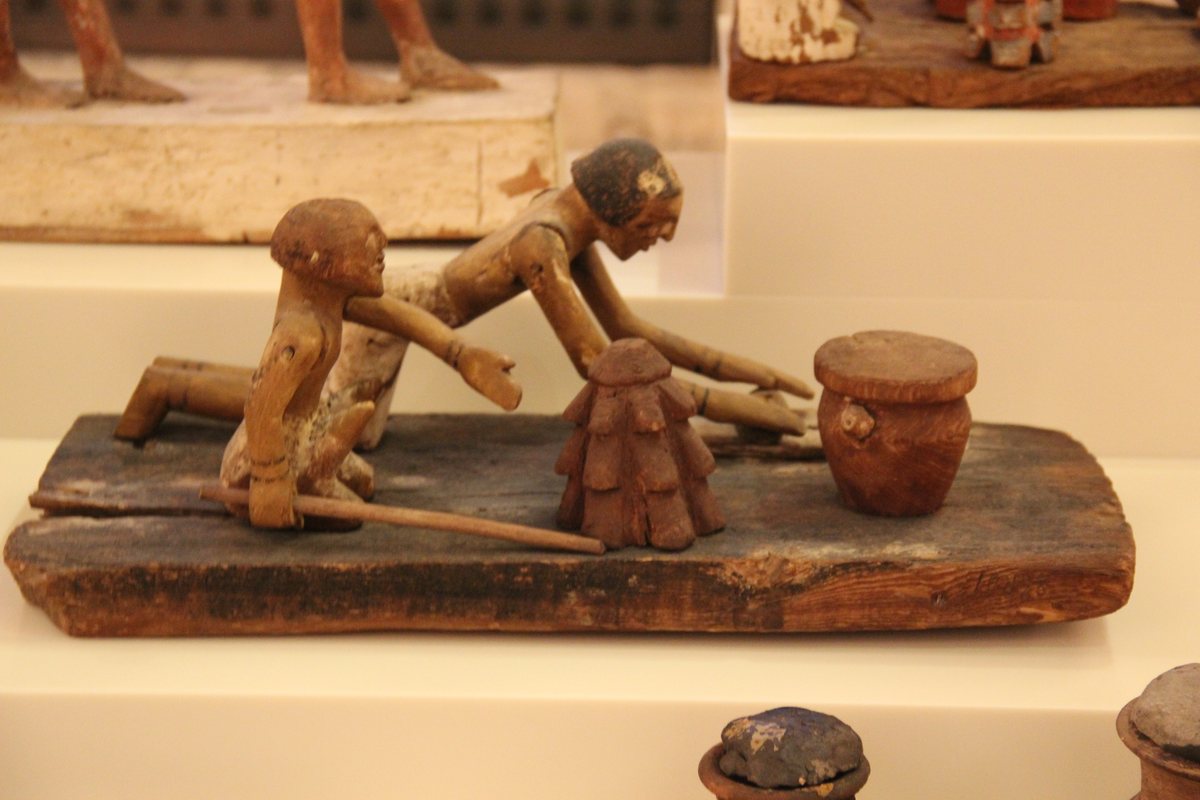
A bakery model, coffin or inlaid object can require several tasks, tools and specialists. List necessary operations but avoid inventing a modern job hierarchy. Repetition, joins, tool traces and workshop finds can support coordinated production. Named patrons do not replace the many people who sourced, prepared, assembled and maintained material.
Keep condition out of the ingredient list
Green corrosion, faded pigment, salt crust and darkened coating may be later transformations rather than original materials. Describe current surface and label identification on separate lines. Conservation records can explain stability or treatment; a visitor photograph cannot. This distinction prevents the present appearance from becoming an ancient recipe.
Compare two material labels
Choose similar objects in different cases and compare specificity, order and qualifiers. One label may foreground core material, another decoration or technique. Differences can reflect available research, gallery purpose and editorial space. Do not assume inconsistent wording proves inconsistent objects; identify exactly which fields differ and what source could resolve them.
Build a making sentence
Write: ‘The label identifies…, visible construction shows…, and further analysis would be needed to confirm…’. This structure keeps institutional knowledge, observation and research limit visible. It adds genuine material understanding without turning a short field into a complete technical report.
Use dimensions with material
Thickness, span and scale affect what a material can do. A thin metal sheet, heavy stone block and delicate woven fragment demand different supports and techniques. Copy published dimensions before interpreting construction. A close photograph can make all three appear equally solid, while the actual size may explain joins, finishing and present conservation choices.
Write the composite hierarchy
List structural core, joining material, prepared surface, decoration and later support in that order where evidence allows. Add ‘not visible’ for hidden layers. This hierarchy prevents gold, pigment or glaze from becoming the whole object and makes modern mounts legible without confusing them with ancient construction.
Keep the field connected to the whole label
After analysing this field, return to title, material, date, provenance, inventory number and qualifiers together. A strong interpretation explains how the fields support or limit one another. Do not let one precise line compensate for an uncertain findspot or missing technique. Finish by naming the claim that remains strongest and the one that most needs follow-up.
Copy exact wording and inventory number. Preserve qualifiers. Confirm changing records with the responsible institution.
Institutional sources reviewed 1 August 2026: Ministry museum directory ↗.