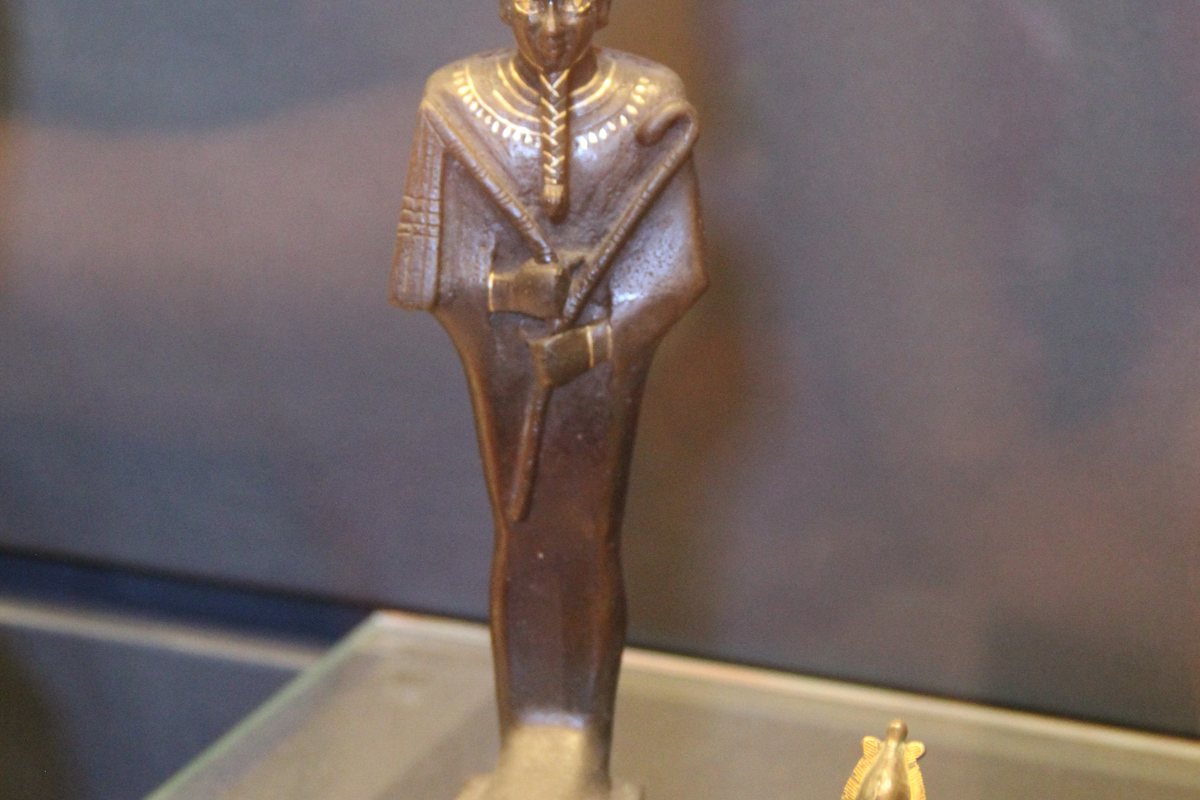
Museum labels place objects in time through reigns, dynasties, centuries, broad periods and archaeological phases. These systems overlap but are not interchangeable. A neat date can come from inscription, context, style, scientific analysis or comparison, each with different precision. Copy the range and the period name before asking what evidence supports them.
Copy both ends of a range
Do not shorten 1550–1295 BCE to ‘about 1500 BCE’ unless the institution does. The width communicates uncertainty and the limits of evidence. Note ‘circa,’ ‘probably’ and question marks. When comparing objects, use the original ranges so partial overlap remains visible rather than forcing a false sequence.
Separate object date from event date
Manufacture, use, deposition, excavation, acquisition, conservation and display happen at different times. A label’s main date usually concerns production or period attribution. Add discovery and observation dates on separate lines. This prevents an ancient date from swallowing the modern biography that explains current knowledge and condition.
Understand what period names do
Old Kingdom, New Kingdom, Late Period, Roman Period and later historical labels organise broad change. Dynasty and reign can be narrower; archaeological phases may be site-specific. Record the system used rather than converting everything immediately. Translation between chronologies requires a reliable reference and may hide scholarly debate.
Look for dating evidence
A royal name, excavated layer, associated pottery, material technique or stylistic comparison can support attribution. Public labels rarely explain every method. Ask which evidence is object-specific and which is comparative. Style is not mere visual opinion, but it becomes stronger when combined with inscription, context and technical study.
Do not date from appearance alone
Bright colour does not prove recent work; damage does not prove great age. Conservation, burial and display transform surfaces unevenly. Copy the institutional date and keep your observation focused on form and condition. If the attribution seems surprising, use the inventory number to find the current record rather than correcting the label from intuition.
Preserve revisions
Online catalogues may revise a date while a printed label remains older. Record each source and access date. A changed attribution is part of research history, not a reason to hide the earlier view. Compare the evidence and level of precision before selecting one for publication.
Use a parallel timeline
Draw four rows: object production, documented ancient reuse, excavation or acquisition, and present display. Place only supported dates. Blank rows are valuable because they show missing biography. The format lets a visitor see how a seemingly fixed ancient date sits inside several documented time systems.
Write time without false precision
Use ‘dated to,’ ‘assigned to’ or ‘probably made during’ according to the label. Avoid adding an exact year when only a reign or century is given. Precision should reflect evidence, not the neatness of your note or schema.
Compare date and style wording
Labels may say ‘reign of,’ ‘dynasty,’ ‘in the style of’ or ‘probably later.’ These are not decorative variations. One associates an object with political chronology; another describes formal comparison. Copy the entire phrase, then ask whether inscription, provenance or technique provides independent support. Do not convert stylistic resemblance into a named reign without a cited source.
Date the source you use
A gallery observation, official database and printed catalogue can carry different revision dates. Record when you consulted each. If a recent page gives a broader range than an older publication, explain the change instead of selecting the narrower date because it looks more informative. Chronological precision should increase only when evidence does.
Keep the field connected to the whole label
After analysing this field, return to title, material, date, provenance, inventory number and qualifiers together. A strong interpretation explains how the fields support or limit one another. Do not let one precise line compensate for an uncertain findspot or missing technique. Finish by naming the claim that remains strongest and the one that most needs follow-up.
Copy exact wording and inventory number. Preserve qualifiers. Confirm changing records with the responsible institution.
Institutional sources reviewed 1 August 2026: Ministry museum directory ↗.