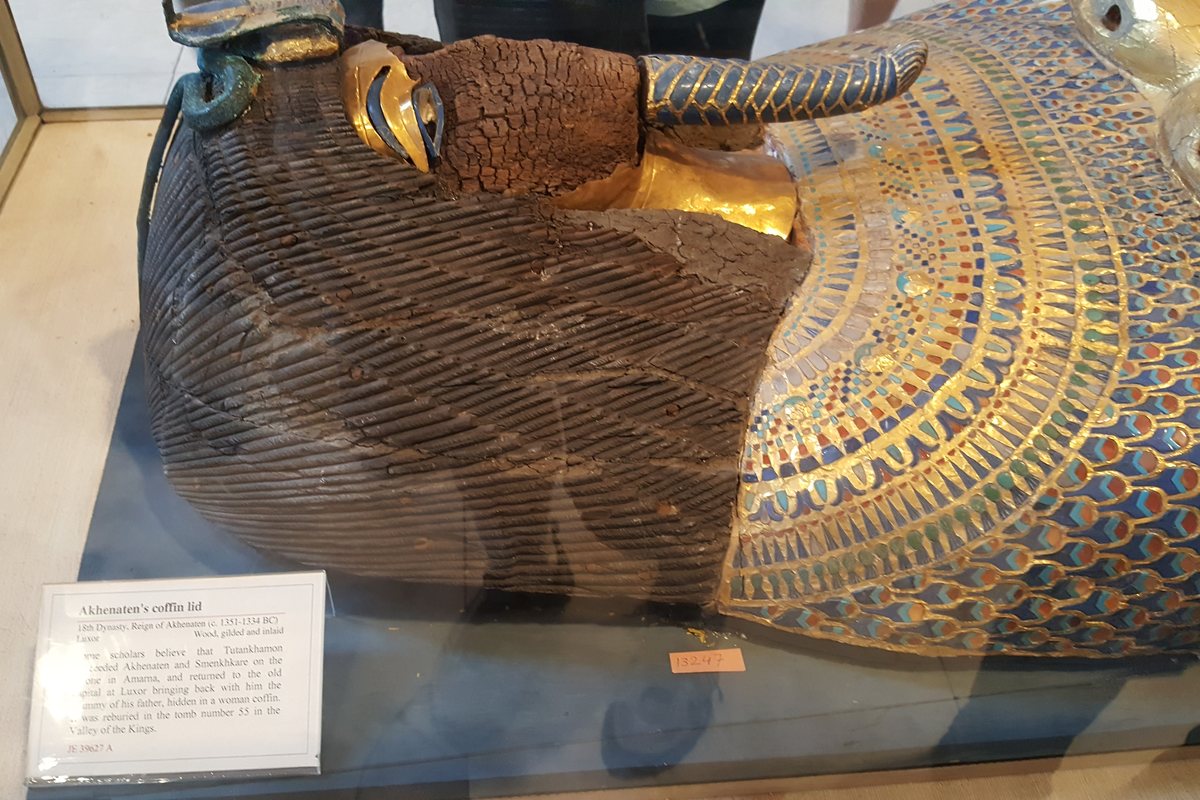
Museum titles are designed for orientation. A few words may combine object type, represented subject, owner, use and modern category. That efficiency is valuable, yet it can make an interpretation look like a self-evident name. Read the title as an editorial decision supported by evidence, then test each part against material, inscription, context and the qualifiers elsewhere on the label.
Break the title into claims
Underline the noun, any named person, function, place and date. ‘Statue of,’ ‘coffin of’ and ‘model of’ make different claims about physical type and relationship. Ask which words are directly visible, which depend on inscription or archaeology, and which summarize later scholarship. This prevents a familiar title from silently becoming the entire object history.
Keep type separate from use
A vessel, palette, mirror or offering table describes form through a modern typology; actual use can be broader, ceremonial or uncertain. Shape supports possibilities but rarely proves a complete action. Look for residues, wear, inscriptions and find context. Write the museum’s type as institutional information and your reconstructed use as a separate, qualified statement.
Treat a personal name carefully
A name may identify a represented figure, commissioner, recipient, owner, donor or person mentioned in text. It does not automatically identify every maker or user. Copy the exact relationship in the label. When the wording says ‘for,’ ‘of,’ ‘belonging to’ or ‘depicting,’ preserve that preposition because it carries the museum’s interpretation.
Notice inherited vocabulary
Older labels and catalogues may use historical period names, transliterations or object categories that later scholarship revises. A difference between gallery label and online record is not automatically careless: public displays and databases update on different schedules. Record the wording and observation date, then compare sources rather than combining them silently.
Do not turn description into symbolism
A title such as ‘falcon amulet’ identifies a form; it does not supply one universal meaning for every period and context. Symbolic interpretation needs date, material, inscription, findspot and comparison. Begin with the object category, then ask which evidence supports cultural meaning. Avoid filling a short label with generalized dictionary symbolism.
Use the reverse test
Imagine searching for the object without its current title. Which material features, dimensions, inscription or inventory number would still identify it? This exposes which title words are descriptive and which are interpretive. It also makes your note resilient if the institution later changes a name, date or represented identity.
Write an accountable title
Draft one line with physical type first, relationship second and uncertainty visible: for example, ‘Painted wooden figure, probably representing…’. Do not replace the museum title in your notes; place your version beside it. The contrast reveals what the official label prioritizes and which questions your observation adds.
Return to the case group
An isolated title can imply an isolated object. Check whether neighbouring pieces share findspot, owner, period or only visual type. Copy the case heading and grouping logic. A title becomes more precise when the display relationship is understood, and less likely to turn a comparative arrangement into a false archaeological assemblage.
Compare title and description
Some labels place a concise title above a longer physical description. Do not merge them. The title identifies the editorial entry point; the description may record posture, decoration, preserved parts and evidence behind the identification. Compare which words repeat and which add a new claim. If the description introduces uncertainty absent from the heading, preserve it in every later caption.
Keep your photograph connected
Where photography is permitted, capture the object and its label as separate images, then place the inventory number in both filenames or notes. A dramatic object photograph without documentary identity is difficult to verify. Do not publish a label photograph if gallery rules prohibit it, and avoid including nearby visitors or personal information in the frame.
Keep the field connected to the whole label
After analysing this field, return to title, material, date, provenance, inventory number and qualifiers together. A strong interpretation explains how the fields support or limit one another. Do not let one precise line compensate for an uncertain findspot or missing technique. Finish by naming the claim that remains strongest and the one that most needs follow-up.
Copy exact wording and inventory number. Preserve qualifiers. Confirm changing records with the responsible institution.
Institutional sources reviewed 1 August 2026: Ministry museum directory ↗.