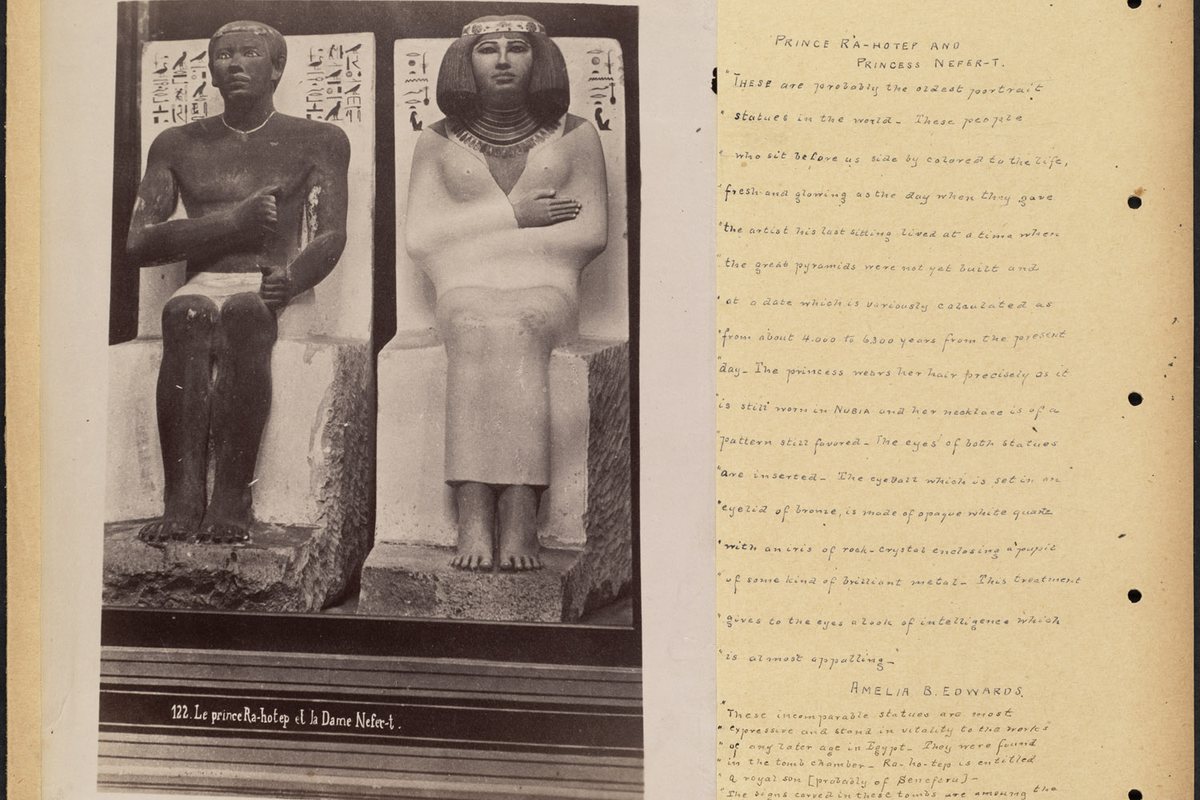
A place name on a label can describe origin, archaeological findspot, cultural association or present collection. ‘From Egypt’ is geographical orientation, not a full provenance. Responsible reading separates where material came from, where an object was made or used, where it was deposited and discovered, and how it entered the museum.
Copy the preposition
‘Made in,’ ‘found at,’ ‘from,’ ‘excavated near’ and ‘said to be from’ carry different levels of claim. Preserve the exact phrase and punctuation. Removing ‘probably’ or ‘reported from’ converts uncertainty into fact and can erase problems in older collecting records.
Move from site to feature
A city or necropolis is only the first level. Look for tomb, chamber, shaft, temple court, settlement room, pit or layer. Precise position connects an object to architecture and neighbouring finds. When the label gives only a broad place, do not invent a feature from the object type.
Separate production from discovery
Stone source, workshop location and findspot can be far apart. Material analysis may suggest geology while inscriptions or archaeology support movement. One endpoint does not reconstruct the route. Map documented locations with solid lines and hypotheses with dotted lines.
Check whether neighbours belong together
Objects placed side by side may share excavation context, type, material or curatorial theme. Read the case heading and individual labels. A visually coherent display is not automatically an intact ancient group. Assemblage claims require shared find records, not proximity in the gallery.
Include acquisition history
Excavation division, purchase, donation, confiscation, transfer and institutional reorganisation can shape current collections. Public labels may summarise this modern path. Use official collection histories and inventory records, especially where provenance is incomplete. Do not invent legality or ownership from absence of detail.
Treat missing provenance as information
An unknown findspot limits dating, function and social interpretation. It does not make the object meaningless, but it changes which questions can be answered. State the gap openly and avoid borrowing context from a similar object. Technical study can reveal material and manufacture without restoring a lost excavation record.
Reconnect museum and landscape carefully
Regional museums can keep objects near discovery landscapes, while national and international collections support other comparisons. Present location does not recreate ancient context. Describe current stewardship, original setting and movement as separate phases without ranking them through a simple near-versus-far story.
Build a five-place record
List material source where documented, production place, use setting, findspot and present museum. Add the source beside each line. Most records will contain blanks. Those blanks are the honest structure of provenance research and the best guide to what to verify next.
Distinguish provenance from provenience
Usage varies, but archaeological writing often uses provenience for the exact find location and provenance for the broader ownership or movement history. Follow the institution’s vocabulary and define your fields. The important discipline is not enforcing one spelling; it is preventing excavation context, geographical origin and modern acquisition from becoming one undifferentiated line.
Cite the absence responsibly
Write ‘no findspot stated on the gallery label’ rather than ‘unknown provenance’ unless the collection record confirms the wider absence. The label may omit information for space that exists in an archive. This wording keeps your observation accurate and leaves room for official follow-up without implying that undocumented means never documented anywhere.
Keep the field connected to the whole label
After analysing this field, return to title, material, date, provenance, inventory number and qualifiers together. A strong interpretation explains how the fields support or limit one another. Do not let one precise line compensate for an uncertain findspot or missing technique. Finish by naming the claim that remains strongest and the one that most needs follow-up.
Copy exact wording and inventory number. Preserve qualifiers. Confirm changing records with the responsible institution.
Institutional sources reviewed 1 August 2026: Ministry museum directory ↗.