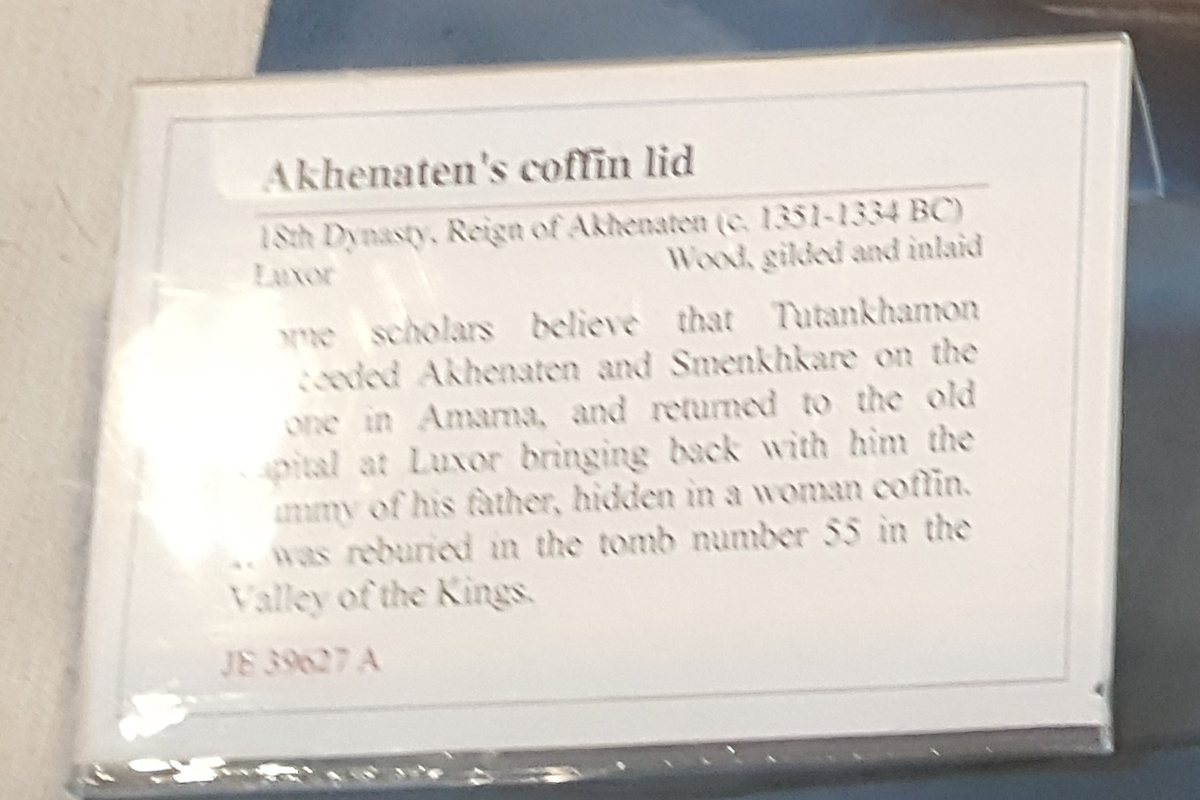
Look for a gallery date
Labels may show installation, copyright or revision dates; if absent, record only your observation date. Do not infer when text was written from typography alone.
Separate label from database
A case label, mobile guide, collection database and catalogue have different space, audience and update cycle. Cite each as its own publication rather than merging their content.
Read the mount
Orientation, height, support and available viewpoints influence which label claims seem obvious. Record hidden sides and whether the object is isolated or grouped.
Compare historic photographs
Institutional archives can show older cases, groupings and titles. Changes reveal curatorial history, but image angle and caption must be verified before comparison.
Treat revision as research
A renamed object or wider date range can reflect new evidence. Preserve the earlier attribution with its source instead of framing every change as correction of a careless past.
Write a display biography
List accession, earlier display where documented, current gallery and observation date. Leave gaps. This modest timeline keeps museum interpretation inside the object’s modern history.
Record the case relationship
Note whether label and object share a case, wall, plinth or numbered key. A numbered group label may describe several objects while a small caption identifies one. Copy the mapping before assigning group information to an individual object. Display architecture is part of how editorial claims reach the visitor.
Notice additions beyond text
Maps, reconstruction drawings, replicas, digital screens and lighting can carry claims not repeated on the label. Identify each medium and its source where stated. A reconstruction proposes missing relationships; it should not be remembered as a direct photograph of the surviving object or original setting.
Compare without nostalgia
Older displays may preserve useful groupings while newer ones add access, context or conservation control. Avoid ranking them only by density or visual drama. Ask what each installation made legible, what it protected and what evidence it used. Display history is analysis of changing choices, not a search for one timeless correct case.
Use the observation date
Every transcription and display note needs the day it was seen. Labels, galleries and online records can change, while a photograph may circulate without that context. The date does not prove accuracy; it tells later readers which version you encountered and makes responsible comparison possible.
End with one accountable paragraph
State what the museum says, what you directly observed, which source you checked and what remains uncertain. Keep these four parts in separate sentences. This compact structure is useful in a notebook, caption or article and prevents later research from being remembered as something visible in the original case. Add the inventory number and institution so another reader can repeat the route without relying on your object title.
Record institution, inventory number, wording and observation date before adding later research.